
The first time I remember learning about “the Strait of Hormuz” was in 2007 while reading Alan Greenspan’s (the former Fed chair) autobiography. Back then, Greenspan pointed out that 1/5th of the world’s oil passed through the Strait every day and this, of-course, was the reason the US and other world powers were constantly involved in Middle East affairs. Iraq was in the headlines in those days. Here we go again nearly 20 years later with Iran.
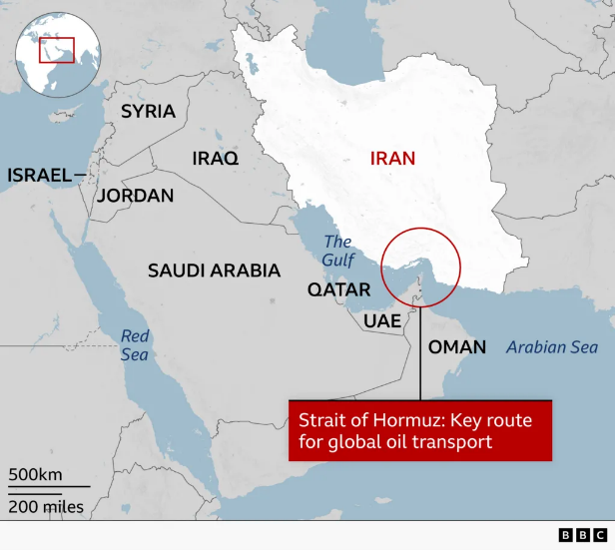
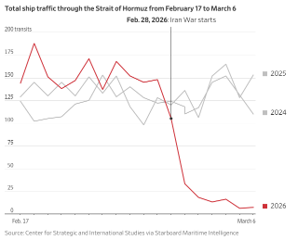
For decades, it’s been well known that military planners and administrations of both major political parties have been reluctant to engage with Iran in a serious military conflict for fear of the Strait of Hormuz closing and the resulting economic damage it would create. Iran has the longest border of any country along the geographic chokepoint and thus the biggest strategic advantage for controlling it. Now, what was long considered unthinkable has happened. Following military strikes by the US and Israel, the Iranians have effectively closed the Strait. Oil analysts are calling this the largest supply shock since WWII. As feared, tanker traffic has plunged and energy prices have started to rise significantly:
As someone who devours a lot of financial information, I’m actually surprised the markets have held up as well as they have. Globally, stocks are down about 10% from their highs as I write this but given the magnitude of the energy impact, I would have guessed a sharper decline. The markets seem to be thinking this will be a short-lived crisis but I worry the biggest effects are still to come.
To understand what is happening and what may happen, one has had to become an amateur geopolitical and oil analyst. I’ve been doing my best in recent weeks. Here’s what I’m watching for now.
The biggest price spikes and possibly shortages are still likely in front of us and here’s why. When a tanker ship departs from the Persian Gulf, it can take over a month to reach its final destination. This means that if the Strait closed in early March there’s a delay before the most acute effects are felt because oil that was already in transit has yet to reach the market. JP Morgan released a very interesting chart projecting when various parts of the world are likely to see deliveries from the Gulf begin to choke off:
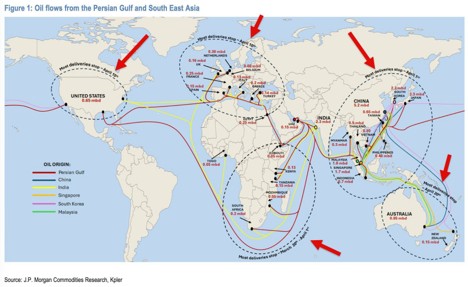
As you can see, the timing depends on where you are in the world but the first half of April appears to be where the rubber will meet the road. North America has a longer buffer in part because of its distance from the Gulf but also because of energy production here. For some time, the US has been the largest oil producer in the world. Asia appears to be the most exposed to what’s happening. All the estimates I’ve seen suggest around 80% of the oil that comes out of the Strait of Hormuz goes east to China, the Koreas, Singapore, etc. But oil is a global market. If prices spike, it will ultimately be felt everywhere.
The situation is changing by the day but the next month could be a turbulent period. Right now the Iranians control the Strait. The US has been building up military forces in the area but as I write this, there’s reporting in the Wall Street Journal that the president is considering pulling out of the Gulf even if the Iranians still control the key waterway. What would that mean for global oil flows? Would they open the Strait or continue to restrain traffic to hold oil prices up which benefits them, their ally Russia, and punishes the western world?
No one knows how this situation will play out. It will conclude ultimately because it is untenable for everyone involved. The Iranians are taking major hits every day from the US and Israel. Their military has been severely crippled, and civilian infrastructure is being destroyed. Other oil producing countries in the area stand to lose hundreds of billions of dollars collectively between lost oil revenues and economic activity generally. The US and Israel are spending many billions on a military campaign that doesn’t appear to be achieving their objectives. And the global economy will ultimately suffer if oil prices remain elevated or move higher.
But given where things stand today, it looks naïve to think this will quickly conclude and things will snap back to where they were. As long as the Iranians control tanker traffic in the Strait, the outlook for the oil market is highly uncertain.
This poses a few key risks for investors. Stocks could easily come under more selling pressure if oil remains elevated and starts to hit the global economy. Likewise, inflation could reaccelerate. Almost everything in the economy is impacted by oil prices. Diesel is the main fuel source for the transportation of raw materials and products for example. It also powers the tractors and trucks in the agricultural industry. And I’d be remiss if I didn’t mention the impact on fertilizers which are also oil-based. The bottom line is rising oil prices touch virtually every part of the economy and are inflationary (all things equal).
This creates issues for investors with bonds and other fixed income holdings especially. Bonds generally don’t do well in inflationary environments. Not only does inflation eat away at bond principal, but rising interest rates can punish bond prices. This is something I’ve been concerned about for some time (preceding the Iran situation).
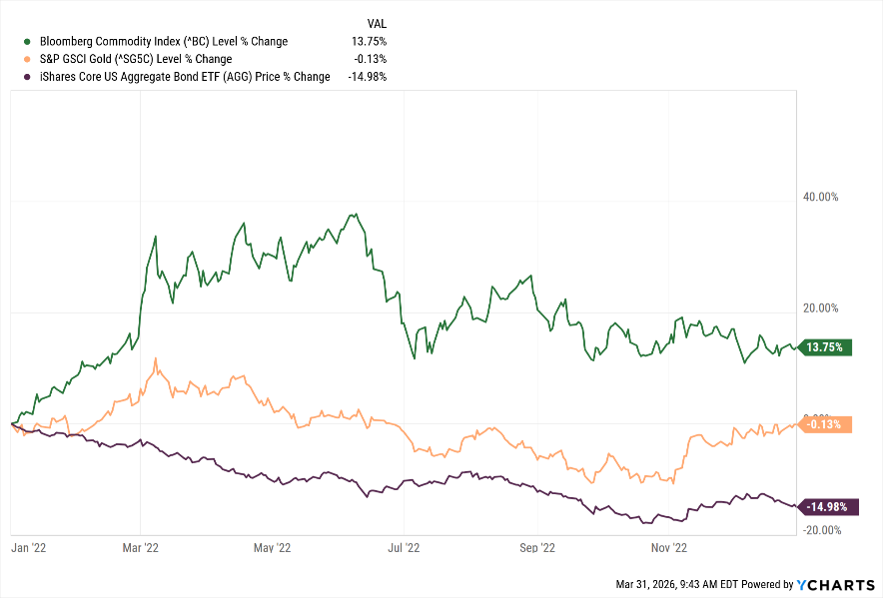
Historically, what has been better in inflationary environments is commodities and precious metals such as gold. The year 2022 is a good example. You may recall, this is when inflation officially peaked in the US at around 9%. Interest rates rose sharply sending bonds down for their worst performance in over 40 years. Stocks were also down double digits. But gold was basically flat and commodities were up strongly.
Even before the military conflict with Iran broke out, to hedge against inflation and other concerns around the long-term fiscal situation in the US, I had started building positions in these assets in some of the portfolios I manage for clients. I’ve continued to carefully add to these holdings in Q1 which is why some will have seen more than usual trading activity over the past few months.
How the situation in the Middle East concludes is highly uncertain. Almost exactly a year ago we experienced a market shock when tariffs were announced. Stocks sold off by about 20% before the White House blinked and paused the rollout. The stock market rebounded quickly and went on to new highs.
What’s worrying now is the market seems to be looking at the current situation as another short-term disruption…the fighting will stop and everything will go back to how it was. With oil production halted and significant infrastructure destroyed in numerous countries, and Iran in control of the Strait, that seems highly unlikely.
The next month is going to be crucial as the effects of the closure really start to be felt globally. If we do experience a market pullback, this will ramp up pressure to resolve the situation. Crises like this will ultimately conclude but there can be a lot of ugly headlines and market volatility before they do.
For folks in or near retirement, unpredictable events like this are precisely why we generally keep a portion of one’s portfolio conservatively positioned. If you have any questions about your own portfolio, please feel free to reach out.
Norris Lake Financial Planning is a Securities Exchange Commission (SEC) registered investment advisor able to conduct advisory business in states where it is registered, exempt or excluded from registration. All contents contained herein should not be construed as an offer or solicitation for investment advice or for the offer or sale of any security, insurance or other investment product. Data contained here is obtained from believed reliable sources, however, cannot be guaranteed. Investments contain a risk of loss. Please consult a qualified legal, tax or accounting professional before implementing any investment or strategy discussed.


